other

Blogs

  • From a
    From a "Clunky Block" to a High-Tech "Skeleton": Unveiling the Magic of Custom Aluminum CNC Machining
    Apr, 15 2026
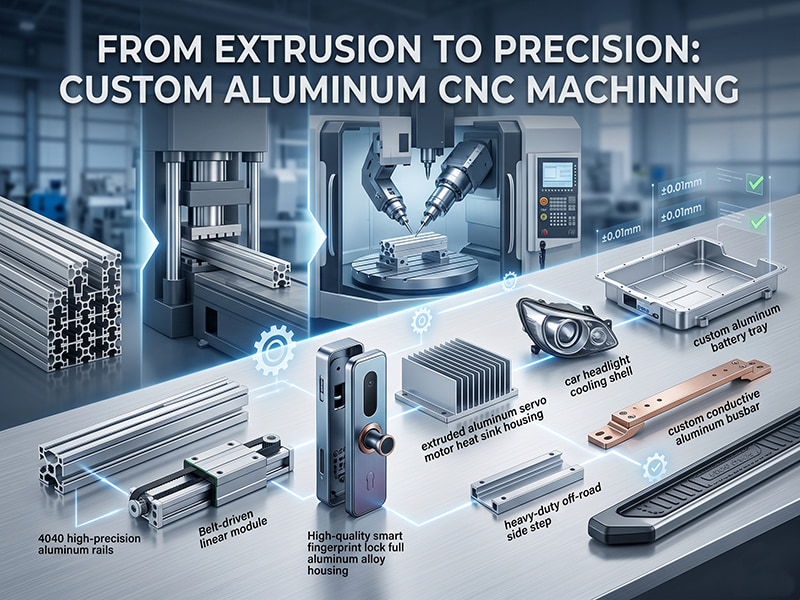
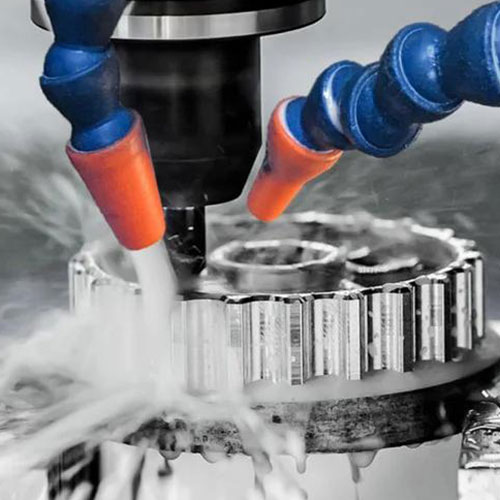
    Have you noticed that modern industrial equipment and consumer products are becoming increasingly sophisticated?   New Energy Vehicles (NEVs) are getting lighter with longer ranges; mechanical arms and 3D printers in factories are moving faster yet remaining rock-solid; even the smart locks on our front doors are flaunting a premium metallic finish.   Behind all these innovations lies the golden supporting role of modern industry: Aluminum Alloy. However, what you might not know is that for a standard extruded aluminum profile to transform into a seamlessly integrated component, it must undergo a magic "makeover"—Aluminum Profile CNC Machining.   Today, let's dive into why this craftsmanship is so critical.   The Core of the Magic: Turning "Almost" into "Absolute Precision" In traditional machining, minor tolerances are common. But in modern automation or the EV sector, a deviation of even 0.1 millimeters can cause an entire assembly line to jam or a vehicle to rattle.   CNC (Computer Numerical Control) machining was born to eliminate these errors. By programming the blueprints into a computer (CAD/CAM), a CNC machining center can mill, drill, and tap the aluminum with the precision of a master sculptor. Take our standards at Yuebaoke Technology (YUEBAOKE) as an example: we can control precision down to a staggering ±0.01mm and keep deformation rates under 0.5%.   This ultimate control allows aluminum profiles to shine across cutting-edge industries:   Scenario 1: The "Tough Guys" of Industrial Automation Need Finesse Imagine a high-speed industrial 3D printer or a laser engraver. If the base or guide rails wobble even slightly, the output is ruined. To solve this, equipment manufacturers rely on high-quality industrial aluminum profiles refined by CNC machining. For instance, Yuebaoke’s 4040 high-precision aluminum rails and laser engraver aluminum enclosures feature absolutely perpendicular and aligned mounting holes. When paired with our CNC Gantry Plates and belt-driven linear modules, the equipment operates with silky smoothness and rock-solid stability.   Scenario 2: The Ultimate Weight-Loss Tool for NEVs and Mobility For NEVs and electric mobility tools to go the distance, "lightweighting" is the key. Aluminum is nearly two-thirds lighter than steel, making it the top choice for automakers. However, these parts must be both light and incredibly durable. For such strict requirements, we utilize 6061-T6 or even 7075 aerospace-grade high-strength aluminum. Through CNC machining, we hollow out unnecessary weight while precisely retaining the reinforcing ribs. Examples include our custom E-bike/scooter chassis, heavy-duty off-road side steps, and highly shock-resistant aluminum engine mounts. They deliver extreme impact resistance while perfectly meeting lightweight demands.   Scenario 3: "Smart Hardware" with Premium Aesthetics and Robust Cores If you have a high-end smart lock on your door, its housing is highly likely a CNC-machined full-aluminum component. Smart locks are packed with precise circuit boards and require excellent dust, water, and vandal resistance. Yuebaoke’s smart fingerprint lock aluminum housings are first die-cast, then precision CNC-milled to create the perfect internal cavity for electronic components, and finally anodized. The result is a housing with flawless dimensions and a scratch-resistant, premium matte metallic finish. Similar applications include our frameless glass door clamps, which balance heavy-duty support with architectural aesthetics.   Scenario 4: The Unsung Heroes of Thermal Management and Power Electronic devices and motors generate massive heat when running at full speed. Aluminum naturally has excellent thermal conductivity, and CNC machining pushes its cooling potential to the limit. Take our 40/60/80/130 series servo motor housings and die-cast + CNC automotive headlight shells as examples. By CNC milling deep and dense cooling fins, we dramatically increase the surface area, keeping the equipment "cool" under extreme operation. In the power transmission sector, our custom conductive aluminum busbars ensure low contact resistance and long-term connection safety for heavy-duty grids.   Why Do Smart Buyers Prefer "One-Stop" Manufacturers? Many buyers suffer headaches when sourcing aluminum parts: using Factory A for extrusion, Factory B for CNC machining, and Factory C for surface finishing. The communication costs are immense, and if a defect occurs, everyone passes the buck.   The real solution is an End-to-End One-Stop Service.   At Yuebaoke (YUEBAOKE), we are not just a machine shop; we are your "One-Stop Aluminum Manufacturing Expert." From 6000/7000 series aluminum extrusion to high-precision CNC machining, stamping, bending, TIG welding, and final surface treatments (anodizing, powder coating), we handle the entire closed-loop process in-house. If you have a brilliant idea or a CAD drawing, leave it to us. We offer full OEM/ODM custom services, rapid 3-day prototyping, and 15-day mass production delivery.   Let the aluminum experts bring your most competitive products to life. We turn your blueprints into reality!
  • Why Are Precision Metal Stamping Parts Crucial for Modern Medical Devices?
    Why Are Precision Metal Stamping Parts Crucial for Modern Medical Devices?
    Feb, 10 2026
    You rely on precision metal stamping parts to achieve unmatched accuracy and consistency in medical device manufacturing. These components support your need for strict quality and regulatory compliance, which leads to safer and more effective devices. Companies with ISO13485 accreditation, such as Clamason, produce hundreds of millions of high-quality components each year, reflecting a strong commitment to patient safety and reliable performance. The rapid growth of the medical stampings sector shows how innovation and precise manufacturing drive advancements in healthcare.   Key Takeaways Precision metal stamping ensures high accuracy and consistency in medical device manufacturing, which is vital for patient safety. Compliance with ISO and FDA standards is crucial for biocompatibility, helping to avoid costly recalls and ensuring device effectiveness. Advanced inspection processes guarantee that every stamped part meets strict quality requirements, enhancing reliability in medical applications. The ability to produce miniaturized and complex parts supports innovation in medical devices, allowing for advanced treatments and faster time-to-market. Rapid production capabilities of precision metal stamping enable manufacturers to meet urgent healthcare needs while maintaining high quality.   Precision and Consistency in Medical Devices Accurate Functionality with Precision Metal Stamping You demand high accuracy in medical device manufacturing. Precision metal stamping gives you this advantage by using hardened steel dies that keep dimensional variation to a minimum. This process ensures that every batch of parts matches your exact specifications. When you choose precision metal stamping, you get repeatable results that alternative manufacturing methods cannot always guarantee. This repeatability is essential for medical devices, where even a small error can affect patient safety and treatment outcomes.   Note: Dimensional accuracy in medical device manufacturing directly impacts patient safety and the effectiveness of treatments. Implantable devices often require tolerances measured in microns to ensure proper fit and function.   You benefit from the ability to produce large volumes of components with consistent quality. Precision metal stamping allows you to meet strict regulatory standards, such as ISO and FDA requirements, which are critical for biocompatibility and patient safety. Consistent production of stamped metal parts that meet clinical standards helps you avoid costly recalls and ensures that your devices perform as intended in healthcare settings.   Compliance with ISO and FDA standards is essential for biocompatibility and patient safety. Consistent production of components that meet stringent clinical standards is crucial. Dimensional accuracy affects both safety and treatment effectiveness. Implantable devices require extremely tight tolerances.   Reliability for Medical Applications You rely on precision metal stamping parts to deliver unmatched reliability in medical device manufacturing. High reliability means that your devices work as designed, every time, without unexpected failures. This reliability is especially important for surgical instruments, implants, and drug-delivery systems.   Feature Description ISO 13485 Compliance Ensures quality management in medical devices Biocompatible Coatings Enhances safety and compatibility with the body Parting Line Accuracy ≤0.003mm for surgical instruments Surface Polish Ra 0.1μm for drug-contact surfaces In-Process Inspection Laser scanning for quality assurance Validation Time Reduction 60% reduction for orthopedic implant manufacturers   You can trust that each part meets your specifications because of rigorous inspection and measurement processes. Metal stamping parts manufacturers use advanced quality management systems, such as ISO 9001:2015 and ISO 13485, to ensure every component is traceable and compliant with regulatory standards. Structured job records, material traceability, and operator identification support rapid issue containment and long-term supplier reliability.   Ongoing checks and final inspections confirm part conformity. Documentation includes inspection results and final release authorization. Quality systems support rapid correction of any issues.   Precision metal stamping, combined with CNC milling and advanced inspection, ensures that your medical devices maintain the highest levels of safety and performance. Even minor errors can compromise patient safety, so you need manufacturing partners who prioritize accuracy, quality, and compliance at every step.   Material Versatility and Biocompatibility Meeting Medical Safety Standards You need to select materials that guarantee safety and performance in medical applications. Precision metal stamping gives you the flexibility to use a wide range of biocompatible materials for your parts. This flexibility ensures that your medical devices meet the highest standards for patient safety and reliability. You can see the most common materials used in the table below:   Material Properties Applications Titanium High strength-to-weight ratio, corrosion resistance Implants, surgical tools Aluminum Lightweight, strong, corrosion-resistant Housings, enclosures in medical devices Brass Antimicrobial, malleable, ductile Complex parts in medical equipment Stainless Steel Exceptional strength, corrosion resistance, withstands sterilization Surgical instruments, implants, housings   You rely on these materials to create stamped metal parts that perform well in demanding healthcare environments. Metal stamping parts manufacturers help you achieve tight tolerances and consistent quality, which are essential for meeting regulatory requirements. You must follow strict standards, such as ISO 13485 and FDA guidelines, to ensure your components are safe and effective.   Precision metal stamping ensures high-precision parts that meet strict quality and safety requirements. The process supports compliance with ISO 13485 and other global regulatory standards. Advanced technology and automation improve quality control and efficiency.   Biocompatible Manufacturing Solutions You must choose parts that are safe and non-reactive for use in the human body. Precision metal stamping allows you to meet the most stringent biocompatibility requirements for medical devices. You benefit from rigorous inspection protocols and validation methods that confirm the safety of your components. Surface treatments applied during manufacturing enhance biocompatibility and reduce the risk of contamination.   Material choices must be safe and non-reactive. Inspection and validation methods ensure compliance with medical standards. Surface treatments improve biocompatibility and device safety.   You can trust that aluminium stamping parts and other stamped metal parts will meet the demands of modern healthcare. By working with experienced metal stamping parts manufacturers, you ensure that your devices remain safe, reliable, and compliant with all regulatory standards.   Miniaturization and Complex Designs Small Parts for Advanced Medical Devices You face increasing demand for smaller, more sophisticated medical devices. Precision metal stamping allows you to create intricate, miniaturized parts that meet these requirements. Micro stamping technology produces extremely small components with tight tolerances. You can rely on this process to deliver consistent quality and reliability, even when working with specialized alloys like beryllium copper or stainless steel.   Micro stamping enables the production of microscopic, highly accurate parts. You use these parts in advanced medical devices, including catheters, implantable sensors, and micro-needles.   You benefit from high-volume, cost-effective manufacturing. This approach ensures that each part meets strict accuracy and material strength standards. When you need to scale up production, you can trust that every batch of components will perform as expected in critical healthcare applications.   Note: Miniaturized stamped metal parts play a vital role in the success of next-generation medical devices. Their precision and reliability support both patient safety and device innovation.   Innovative Manufacturing Capabilities You require flexibility to design complex medical devices that address unique clinical needs. Precision metal stamping gives you this flexibility. You can create parts with intricate geometries and fine features that would be difficult or impossible with other manufacturing methods. You see precision metal stamping used in surgical instruments, implants, and diagnostic equipment. Metal stamping parts manufacturers help you achieve complex shapes and tight tolerances.   You can also choose from a wide range of materials, including aluminium stamping parts, to match your device requirements. This versatility supports rapid prototyping and efficient production. As a result, you can bring innovative devices to market faster and with greater confidence in their performance.   Speed and Scalability in Medical Device Manufacturing Fast Production with Precision Metal Stamping You need rapid production to keep pace with the demands of medical device manufacturing. Precision metal stamping gives you a clear advantage by reducing lead times and supporting fast delivery. You can produce large quantities of precision metal stamping parts quickly, which is essential for meeting urgent healthcare needs. The process uses specialized dies and high-tonnage presses to achieve high-speed production, especially for high-volume runs.   Manufacturing Method Speed of Production Advantages Precision Metal Stamping High-speed production for large volumes Tight tolerances, enhanced quality and reliability CNC Machining Slower, but high precision Greater control, regulatory compliance   You benefit from the ability to achieve tolerances as tight as ±0.0002 inches, ensuring accuracy and quality. Metal stamping parts manufacturers help you deliver consistent results, even when working with complex shapes or aluminium stamping parts. Deep drawn stamping reduces production time and lowers costs, making it ideal for medical devices. You also see less material waste, which supports cost-effective manufacturing. Metal stamping is faster than many other methods for medium to high volumes. The process is more cost-effective once tooling is established. You achieve greater product consistency and quality control.   Efficient Large-Scale Manufacturing You must scale production without sacrificing quality or regulatory standards. Precision metal stamping enables you to produce large quantities of identical parts with minimal variation. Advanced automation and integration of modern stamping machinery reduce errors and increase production speed. You can meet aggressive timelines while maintaining precision and accuracy.   Feature Details Material Thickness Works with foils as thin as .0005” and specialized alloys Production Tolerances Maintains ±0.0005 inches or tighter Volume Capability High-speed, high-volume production of complex, small-diameter components Efficiency Expertise in intricate parts enhances time-to-market and reduces costs   You rely on skilled personnel and technology to ensure quality control throughout the manufacturing process. Although initial tooling costs are high, the per-unit cost decreases significantly in large production runs. This supports cost-effective scalability for medical device manufacturing. Stamped metal parts maintain high accuracy and quality, even at high volumes, which is crucial for healthcare applications. Precision metal stamping enables rapid production of large quantities of parts. Automation and skilled teams ensure consistent quality and regulatory compliance. Cost-effective scalability supports innovation in medical devices.   Enhancing Safety and Innovation in Medical Technology Improving Device Effectiveness You want your medical devices to deliver the highest level of safety and performance. Precision metal stamping gives you this advantage by producing parts with exceptional accuracy and consistency. You can trust that every component meets strict healthcare standards, which reduces the risk of device failure. Advanced inspection technologies and rigorous quality control ensure that your devices perform as intended in critical medical applications. Precision metal stamping parts support tight tolerances and uniformity. You see this in surgical instruments and implants, where even a small error can impact patient outcomes. The process combines multiple forming steps into a single die, which lowers costs and reduces material waste. This efficiency helps you maintain high quality while keeping production affordable.   Note: Smooth surfaces from precision metal stamping make cleaning easier. This reduces the risk of contamination and supports infection control in healthcare settings.   You also benefit from protective treatments like anodising. These treatments improve corrosion resistance and cleanliness, which extends the lifespan of your devices and lowers maintenance needs. When you use precision metal stamping, you help ensure reliable, long-lasting medical technology.   Supporting Medical Innovation You drive innovation in medical device manufacturing by choosing precision metal stamping. This process allows you to design and produce complex, custom components that meet the latest clinical needs. You can introduce new features and advanced functions in your devices, thanks to the flexibility and biocompatibility of stamped metal parts.   Precision metal stamping supports the use of in-die sensor programs. These programs protect stamping tools and guarantee consistent production quality. You gain safer, more reliable parts that help your devices meet or exceed regulatory standards. This proactive approach to quality control encourages new ideas and advancements in medical technology. You can create smaller, more intricate devices for specialized treatments. You achieve faster time-to-market for innovative healthcare solutions. You maintain compliance with strict regulatory requirements.   By working with skilled metal stamping parts manufacturers, you ensure that your devices stay at the forefront of medical progress. You help shape the future of healthcare with every new device you bring to market.     You see how precision metal stamping parts shape the future of medical devices. This process gives you reliable, high-quality components that meet strict standards. You gain speed and efficiency for both prototypes and large-scale production. You achieve consistent quality and customization for advanced medical technology.   * Precision metal stamping drives innovation and safety in medical manufacturing. You help advance healthcare by choosing stamped metal parts from trusted metal stamping parts manufacturers, including aluminium stamping parts for specialized devices.   FAQ What are stamped metal parts used for in medical devices? You use stamped metal parts in medical devices for connectors, housings, and implantable components. These parts provide high precision and reliability, which support patient safety and device performance.   How do metal stamping parts manufacturers ensure quality? You benefit from strict quality control. Metal stamping parts manufacturers use advanced inspection systems, ISO certifications, and traceability records. *Quality checks guarantee that every part meets regulatory standards.   Why is biocompatibility important for aluminium stamping parts? You need aluminium stamping parts to be biocompatible. This ensures that your devices remain safe for patients and do not cause adverse reactions. Biocompatibility supports regulatory compliance It protects patient health   Can stamped metal parts support miniaturized medical devices? You rely on stamped metal parts for miniaturized devices. Micro stamping technology produces tiny, intricate components with tight tolerances. * Miniaturization enables advanced treatments and new medical innovations.   What advantages do you gain from using precision metal stamping? You achieve faster production, consistent quality, and cost-effective scalability. Precision metal stamping lets you meet strict standards and deliver reliable medical devices. Advantage Benefit Speed Rapid manufacturing Consistency Uniform quality Scalability High-volume production  

  • How to Choose a Trusted Supplier for Custom Aluminum Extrusions
    How to Choose a Trusted Supplier for Custom Aluminum Extrusions
    Feb, 10 2026
    Selecting a trusted supplier for Custom Aluminum Extrusions shapes the outcome of your project. You need confidence in production capabilities, material quality, and customer service. Industry surveys show the most valued criteria: Criteria Description Production Capabilities Assess a supplier's ability to meet demand efficiently and scale production. Product Quality Evaluate the extrusion process and the final products. Customer Service Rely on timely communication and support to resolve issues. You gain practical advantages by focusing on these factors.   Key Takeaways Choose a supplier with strong production capabilities to ensure they can meet your demand efficiently. Verify the supplier's industry experience and quality control processes to guarantee high-quality aluminum extrusions. Look for customization options that allow you to specify exact dimensions and shapes for your project needs. Assess the technology and equipment used by the supplier to ensure precision and reduce scrap rates. Check for certifications like ISO 9001 to confirm the supplier's commitment to quality and industry standards.   Evaluating Aluminum Extrusion Supplier Experience Industry Knowledge You need an aluminum extrusion supplier with deep industry knowledge. This expertise shapes the quality and reliability of your custom aluminum extrusions. Experienced suppliers understand the importance of effective quality control. They ensure aluminum extrusions meet precise specifications, which is vital for demanding sectors like aerospace and healthcare. You benefit from their commitment to rigorous quality assurance, which builds trust and delivers consistent results. A reliable aluminum extrusion manufacturer monitors and inspects every stage of production. You can verify their industry knowledge by checking if they: Monitor and improve quality at each manufacturing stage. Inspect raw materials and confirm the correct aluminum alloy. Check extrusion dies to match your design specifications. Identify visual defects such as surface cracks or uneven coatings. Measure critical dimensions, including wall thickness and hole sizes. You should also look for compliance with recognized standards. These include ASTM B221 for aluminum extrusions, ISO 9001 for quality management systems, and AA standards for material and process control. These protocols guarantee that your aluminum extrusion supplier delivers products that meet industry benchmarks.   Track Record with Custom Aluminum Extrusions A strong track record signals that your aluminum extrusion manufacturer can handle complex custom aluminum extrusions. You should review their history with similar projects and examine their technical capabilities. The following table highlights key specifications that demonstrate expertise: Capability Specification Circle Sizes Up to 18 inches Length Capabilities Up to 50’ for mill finish, 25’ in-house for anodized, 24.5” for painted Thermal Strut Lengths Up to 25′1 Precision Cutting Lengthwise precision cutting to +/- .002” Additional Services Drilling, tapping, stamping, CNC machining, surface grinding, radius bending, welding (MIG and TIG), turning, assembly, fabrication You should also assess performance metrics such as total annual revenue, gross margin percentage, overall equipment effectiveness, scrap rate percentage, throughput, return on equity, and unit cost of goods sold. These indicators reflect the supplier’s operational strength and reliability. Choosing a reliable aluminum extrusion manufacturer with proven experience ensures your project receives high-quality custom aluminum extrusions delivered on time.   Assessing Customization and Manufacturing Capabilities Custom Aluminum Extrusion Options You need flexibility when designing high-quality extruded components for your project. Custom aluminum extrusions allow you to specify exact dimensions, shapes, and order quantities. This level of customization supports innovative designs and specialized applications in industries such as automotive, construction, and electronics. You can request intricate profiles that standard extrusions cannot achieve. This capability gives you a competitive edge and ensures your products meet unique functional requirements. The B2B market values custom aluminum extrusion services because they adapt to specific needs. You can align every detail with your project specifications. This approach increases your design freedom and helps you respond quickly to changing market demands. When you choose a supplier that offers a wide range of custom aluminum extrusions, you gain the ability to create solutions that stand out in your industry. Tip: Always ask your aluminum extrusion manufacturer about their minimum and maximum order quantities, as well as their ability to handle complex shapes. This information helps you plan production and avoid delays.   Technology and Equipment You should evaluate the technology and equipment your aluminum extrusion manufacturer uses. Advanced die technology enables the creation of complex geometries and reduces scrap rates. Hot and cold extrusion processes provide different material properties, so you can select the best method for your application. CNC-controlled lines with real-time monitoring ensure precision and consistency in every batch. Modern aluminum extrusion manufacturers invest in hydraulic or direct-drive presses for accurate temperature and speed control. AI-driven systems optimize extrusion parameters, which improves quality and efficiency. Robotic automation enhances precision and reduces human error. Post-extrusion treatments such as anodizing and powder coating add durability and improve the appearance of your custom aluminum extrusions. A reliable aluminum extrusion manufacturer also offers value-added services. You can benefit from precision cutting, drilling, and welding. These services streamline your workflow and ensure your parts are ready for assembly. Key technologies to look for: Advanced die systems for complex shapes CNC-controlled extrusion lines Real-time process monitoring Robotic automation for fabrication Post-extrusion finishing options   Production Capacity Production capacity determines whether your supplier can meet your deadlines and scale with your business. You should compare suppliers based on several factors to ensure they can deliver high-quality extruded components on time. The following table outlines important factors to consider in aluminum extrusion: Factor Description Profile Specifications Different profiles require varying tonnages and capacities for effective extrusion. Extrusion Ratios The ratio impacts the press capacity needed for different types of extrusions. Material Properties The characteristics of the aluminum affect the required tonnage and press specifications. Production Volume Annual output needs dictate the size and capacity of the press to meet production goals. Operational Efficiency Larger presses can enhance throughput and reduce cycle times, impacting overall production capacity. You should ask your aluminum extrusion manufacturer about their average lead times. Most custom aluminum extrusion orders take between 15 and 30 days from design to shipment. Some suppliers offer expedited production, reducing lead times to as little as 7 to 10 days for urgent projects. Order complexity and material availability can affect these timelines, so clear communication with your supplier is essential. Note: Consistent production capacity and efficient operations ensure you receive your custom aluminum extrusions without unexpected delays. Always verify your supplier’s throughput and ability to scale as your needs grow. By focusing on customization options, advanced technology, and production capacity, you set your project up for success. You ensure your aluminum extrusion manufacturer can deliver the quality, flexibility, and reliability you require.   Ensuring Quality and Certifications Material Selection and Quality Control You need to verify that your aluminum extrusion manufacturer follows strict quality control processes. Material selection forms the foundation of high-quality products. The best suppliers stamp each billet for traceability, ensuring you receive the correct alloy for your project. Quality control continues throughout production. You benefit from continuous monitoring of temperature and speed during extrusion. Dimensional inspections confirm that aluminum extrusion meets specified tolerances. Visual inspections detect surface imperfections, maintaining quality. Mechanical testing after production verifies compliance with specifications and supports traceability. Pre-Production Material Verification: Each billet receives a stamp for traceability. Process Monitoring During Extrusion: Operators monitor temperature and speed for consistent quality. Extrusion Tolerance Verification: Technicians use high-precision tools to check dimensions. Surface Inspection and Defect Detection: Inspectors identify imperfections to maintain quality. Post-Production Testing and Standards Compliance: Mechanical tests confirm compliance and traceability. Tip: Ask your aluminum extrusion manufacturer for documentation of their quality control procedures. This step helps you ensure consistent quality in every batch.   ISO 9001 and Industry Certifications You should always check for certification when selecting an aluminum extrusion manufacturer. ISO 9001 certification demonstrates a commitment to a quality management system. This certification assures you that the supplier follows standardized processes and delivers high-quality products. Many manufacturers also hold certifications for environmental and safety standards. These credentials show that the supplier meets industry requirements and operates responsibly. Note: ISO 9001 certification is a strong indicator of a reliable aluminum extrusion manufacturer. It signals that the company values quality and continuous improvement.   Compliance with Standards You must confirm that your aluminum extrusion manufacturer complies with recognized industry standards. Standards such as ASTM and EN set benchmarks for quality and performance. Suppliers who follow ASTM B209 or B221 ensure dimensional tolerances and surface finishes meet your needs. Compliance with these standards guarantees reliable materials for your application. Project delays often result from suppliers who fail to meet operational metrics like temperature control and documentation compliance. Industry standards set quality benchmarks for aluminum extrusion. Compliance ensures reliable materials and successful outcomes. Top suppliers adhere to ASTM B209/B221 for tolerances and finishes. Most project delays link to suppliers not meeting operational metrics. Choosing a supplier with proper certification and adherence to standards gives you confidence in the quality and reliability of your aluminum extrusion.   Reviewing Customer Support and Financial Stability Communication and Project Management You need a reliable aluminum extrusion provider that excels in customer service and communication. Strong communication abilities ensure you receive updates at every project stage. A reliable aluminum extrusion manufacturer uses clear communication to prevent misunderstandings and delays. You should evaluate their project management by reviewing how they handle logistics, inventory, and supply chain stability. The following table highlights best practices for assessing these areas: Best Practice Description Customer Service and Communication A responsive and knowledgeable customer service team is essential, focusing on transparent communication and defined escalation processes. On-Time Delivery Evaluate the supplier’s ability to deliver on time, considering their logistics planning and inventory control. Supply Chain Stability Assess how suppliers manage raw material sourcing and handle disruptions, ensuring reliability and scalability. You can request references or case studies to see how the aluminum extrusion manufacturer manages complex projects. This step helps you confirm their reputation as a reliable supplier.   After-Sales Service Exceptional customer service does not end with delivery. You should expect your aluminum extrusion manufacturer to provide ongoing support. Effective after-sales service builds trust and ensures quick solutions to any issues. This support increases your satisfaction and encourages long-term partnerships. When you choose a supplier that values service after the sale, you gain peace of mind and confidence in your aluminum extrusion projects. Tip: Ask about warranty policies, technical support, and response times for service requests. These factors show the supplier’s commitment to your success.   Supplier Financial Health You must assess the financial health of your aluminum extrusion manufacturer to ensure long-term reliability. Review the following financial indicators to make an informed decision: Financial Indicator Description Market Diversity Diverse markets can buffer downturns and indicate stability. Working Capital Strong liquidity supports growth and prosperity. Capital Investment Plans Investment in growth reflects confidence and resilience. Governmental Financial Support Financial backing from government programs can signal longevity. Business History A solid track record reveals patterns of stability. Credit History Credit scores from agencies like Dun & Bradstreet provide insight into financial reliability. You can use public records and credit agencies to verify the financial background of your aluminum extrusion manufacturer. This step helps you select a reliable aluminum extrusion manufacturer that will support your business for years.   Comparing Cost and Lead Time Pricing Structure You need to understand the full pricing structure before choosing an aluminum extrusion manufacturer. Suppliers usually break down costs into several components. The table below shows typical cost ranges for custom aluminum extrusion projects: Cost Component Typical Cost Range (USD) Notes Raw Material (Aluminum) $2.00 – $4.50 / kg Based on LME price plus regional premium Extrusion Die (Tooling) $500 – $3,000 (one-time) Custom shapes increase complexity and cost Extrusion Process $1.00 – $3.00 / kg Includes labor, energy, wear, and overhead Surface Finishing $0.30 – $1.50 / meter Anodizing, powder coating, polishing, etc. Secondary Machining $0.20 – $2.00 / operation Cutting, drilling, CNC, and more Packaging & Logistics $0.10 – $1.00 / kg Crate, wrap, palletizing, and freight   You should also watch for hidden costs. These often include packaging upgrades, profile rework, unexpected die revisions, export documentation, and miscommunication about finishing or assembly. Always request a detailed quote and clarify every line item with your aluminum extrusion manufacturer.   Delivery Reliability Reliable delivery is essential for your project timeline. You can evaluate an aluminum extrusion manufacturer by checking their on-time performance metrics and production capacity. Suppliers who offer buffer stock solutions and maintain a multi-source strategy help you avoid delays. Ask about their ability to handle demand fluctuations and review their delivery KPIs. Consistent communication and strong customer service and communication ensure you stay informed throughout the process.   Handling Defects and Returns A reliable aluminum extrusion manufacturer tracks defects at every production stage. Most factories keep defect rates below 2% by using quality data systems and regular review meetings. They log defects, analyze root causes, and improve processes over time. You can minimize risk by choosing a supplier who controls temperature, maintains die condition, uses high-quality materials, and manages the process effectively. If issues arise, prompt customer service and clear communication abilities help resolve returns quickly and keep your project on track.   Selecting the right aluminum extrusion supplier shapes your project’s success. You should prioritize industry experience, robust quality control, and clear communication. Leading case studies show that a reliable partner offers integrated services, from design to finishing, and holds certifications like ISO 9001 for consistent results. Avoid assuming all suppliers are equal—evaluate capabilities, traceability, and support. When you choose a reliable partner, you gain confidence in quality, delivery, and long-term value.   FAQ How do you verify the credibility of potential suppliers? You should request certifications, review case studies, and check references. You can also examine financial reports and visit production facilities. These steps help you confirm the reliability and expertise of potential suppliers before making a decision. What role do online reviews play in supplier selection? Online reviews provide insight into customer experiences and supplier performance. You can use these reviews to identify strengths and weaknesses. They help you make informed choices and avoid unreliable partners. What questions should you ask during the supplier evaluation process? You should ask about production capacity, lead times, customization options, and quality control procedures. You can also inquire about after-sales support and warranty policies. These questions help you assess the supplier’s ability to meet your project needs. How can you ensure consistent quality in custom aluminum extrusions? You should request documentation of quality control processes and certifications. You can also ask for sample products and review inspection reports. These actions help you verify that the supplier maintains high standards throughout production.

leave a message

leave a message
If you are interested in our products and want to know more details,please leave a message here,we will reply you as soon as we can.

Home

Products

WhatsApp

contact

Enter product details (such as color, size, materials etc.) and other specific requirements to receive an accurate quote.
leave a message
If you are interested in our products and want to know more details,please leave a message here,we will reply you as soon as we can.