How to Ensure First-Time Success in Custom Aluminum Profile Prototyping: A Complete Engineering Guide
Sep, 15 2026
Prototyping & Engineering Solutions
In the field of custom aluminum profile processing, many customers encounter a common problem when they first use custom sample-making services: the samples produced don't match their expectations at all. There are issues like dimensional discrepancies, surface burrs, insufficient structural strength, or even the parts being unable to be assembled. These problems not only delay project timelines but also increase the cost of trial and error. So, how can you ensure that your custom aluminum profile samples are successful on the first try? This article will help you sort things out and avoid pitfalls by covering basic understanding, common issues, and practical solutions.
Nearly 10 Yrs Industry Expertise
±0.1 mm CNC Precision
>99.2% Qualification Rate
2 Hours Fast Response
1. BASIC UNDERSTANDING OF ALUMINUM PROFILE CUSTOM DESIGN AND MANUFACTURING
Aluminum profile processing and customization is essentially a service based on demand. Customers provide drawings or samples, and the factory produces according to the design. Sample production is a crucial step in this process as it verifies the feasibility of the design and serves as a basis for mass production later on. For business customers, sampling isn't just about checking the appearance; it's more about verifying structural strength, assembly accuracy, and surface finish.
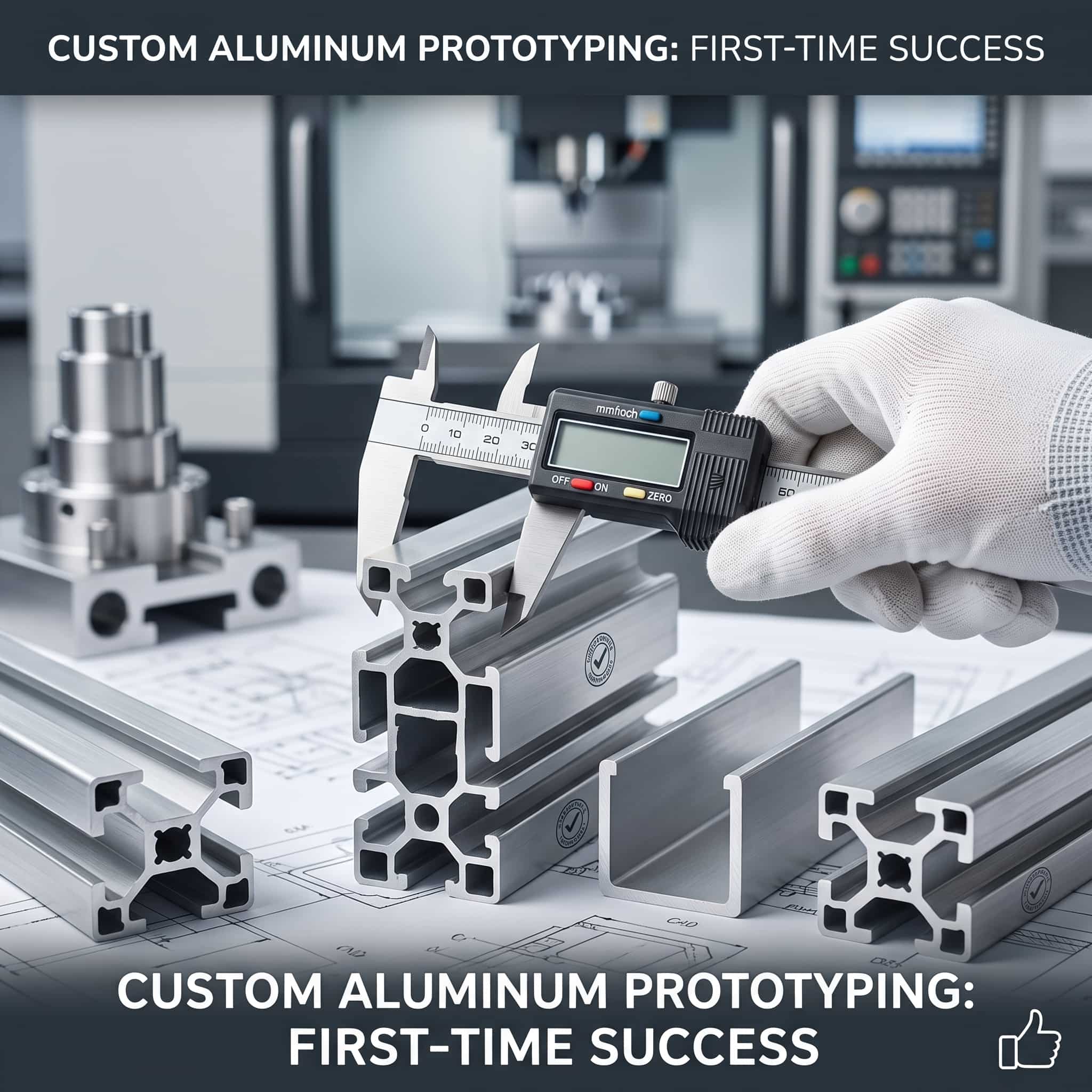
Figure 1: High-Precision Extruded Aluminum Profiles for Prototype Verification
2. ADVANCED MACHINERY & FOSHAN MANUFACTURING CAPABILITIES
In Foshan, the aluminum profile processing industry is highly concentrated, but there are significant differences in technical capabilities and service standards among different manufacturers. Take Yuebao Technology as an example - we have nearly a decade of industry experience and are equipped with multiple high-precision CNC machining centers, CNC milling machines, drilling machines, tapping machines, grooving machines, cutting machines, and finish machining equipment.
We can handle complex custom openings, precision milling, chamfering, cutting corners, drilling, tapping, hollowing out, grooving, and precise shaping in one go. The capabilities of these machines determine the efficiency and accuracy of the prototypes. When looking for a processing factory, customers should first confirm whether the supplier has the right equipment to match the complexity of their drawings. Moreover, custom prototyping isn't just simple production based on drawings. A mature manufacturing plant will conduct a process assessment upon receiving the drawings to determine if there are any processing challenges, such as thin-walled structures prone to deformation, deep hole machining with difficult chip removal, or irregular surfaces requiring specialized fixtures. These assessment results are fed back to the customer, and together they optimize the design to ensure the sample not only meets functional requirements but also is manufacturable.
Machining Process
Equipment & Technical Capabilities
Prototype Advantage
Precision CNC Milling
Multi-axis high-speed CNC machining centers
Tight ±0.1mm tolerances for complex openings and contours
Drilling & Tapping
Dedicated multi-spindle drilling & tapping units
Precise thread specifications, burr-free chamfering
Grooving & Cutting
Precision saw cutting & CNC grooving machines
Clean edges, no secondary deburring required
Process Assessment (DFM)
Digital 3D modeling & finite element analysis
Resolves thin-walled deformation & deep hole chip removal
3. FOUR CRITICAL ROOT CAUSES OF PROTOTYPING DISCREPANCIES
Many customers report that the most troublesome issue during prototyping is discrepancies between the sample and the drawings. There are often multiple reasons behind this:
[01] Incomplete Drawing Information
A qualified manufacturing drawing needs to clearly indicate key parameters such as dimensional tolerances, surface roughness, chamfer requirements, thread specifications, and material grades. If the customer only provides a sketch or 3D model without specifying these details, the manufacturing plant can only produce based on conventional experience, which naturally leads to deviations from expectations.
[02] Improper Selection of Processing Techniques
Aluminum profile processing involves various techniques such as cutting, milling, drilling, tapping, bending, drawing, and surface treatment. The precision and cost of different techniques vary greatly. For example, laser cutting is fast and produces smooth cuts, but it can't machine internal threads; CNC milling offers high precision and can handle complex shapes, but it's relatively less efficient. If customers don't understand these technical characteristics and simply specify a certain processing method, it could lead to increased costs or substandard quality.
[03] Material Selection Mistakes (6061 vs. 6063 vs. 7075)
Common aluminum alloy grades include 6061, 6063, and 7075, each with different mechanical properties, corrosion resistance, and weldability. 6061 has good overall performance and is suitable for general structural parts; 6063 excels in extrusion and is ideal for complex cross-section profiles; 7075 is strong but difficult to process and costly. If customers choose the wrong material—for instance, using 6063 where high strength is required—the sample may deform or break during stress testing.
[04] Poor Communication & Inefficient Feedback
During the sample-making process, clients and manufacturers need to frequently confirm details like drawings, processing methods, and delivery schedules. If there's no efficient communication mechanism in place—say, just relying on email exchanges without real-time feedback—it's easy for information to get lost or misunderstandings to arise, leading to repeated revisions of samples and wasted time.
Alloy Grade
Mechanical Characteristics
Machinability & Extrudability
Recommended Applications
6061-T6
High strength, excellent corrosion resistance & weldability
Superb CNC milling and machining performance
General structural parts, automation brackets, machinery frames
6063-T5
Superior thermal conductivity, smooth surface finish
Exceptional extrusion quality for thin/complex walls
Electronic enclosures, heat sinks, architectural door/window frames
7075-T6
Ultra-high yield strength, comparable to many steels
Difficult to extrude, higher tooling & material cost
Aerospace, high-stress robotics, precision medical testing devices
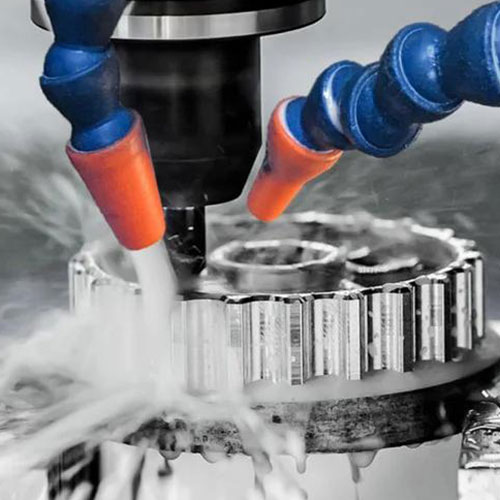
Figure 2: Multi-Axis CNC Precision Machining for Complex Aluminum Prototypes
4. STANDARDIZED ROADMAP: HOW TO ENSURE FIRST-TIME PROTOTYPING SUCCESS
To improve the success rate of custom sample production, both clients and manufacturers need to work together to establish a standardized sample-making process:
Step 1: Complete & Precise Drawings
First and foremost, when providing drawings, clients should make sure they're complete and clear. Along with 3D models, include 2D engineering drawings with all key dimensions and tolerances marked. If there are special requirements, like mirror polishing or anodizing, make sure to specify them clearly. For complex irregular shapes, attach sample photos or actual objects to help manufacturers better understand the design intent.
Step 2: Capable Team & Fast Response
Secondly, when choosing a processing factory, focus on their technical capabilities and service response speed. A capable factory not only has advanced equipment but also an experienced technical team. Take Yuebao Technology as an example - we've assembled a technical team led by senior engineers, with many core members having over 10 years of industry experience and expertise in aluminum profile extrusion, bending, drawing, laser cutting, CNC machining, surface treatment, and other full-process techniques. Such a team can quickly evaluate the feasibility of the design and offer optimization suggestions, helping customers avoid detours.
Step 3: Rigorous Process Review (DFM)
Additionally, it's important to emphasize process review before prototyping. Customers can request the factory to provide a detailed process plan after receiving the drawings, including processing routes, equipment selection, fixture design, and inspection standards. This plan serves as the foundation for communication between both parties and the basis for subsequent quality checks. If the factory can offer digital support such as 3D modeling and finite element analysis, that will be even more beneficial for complex samples.
Step 4: Active Progress Tracking (24/7)
Additionally, progress management during the sample-making process is crucial. Customers can request the manufacturer to provide regular updates on sample production, such as photos or videos of key steps completed. This allows for timely identification of issues and prevents delays in delivery. Yuebao Technology has established a 24/7 response system, responding to urgent requests within 2 hours on weekdays, and regularly providing weekly project reports and monthly summary meetings to ensure transparent and synchronized information, enabling customers to stay informed about project progress at all times.
Step 5: Stringent Acceptance Testing (>99.2% Qualification Rate)
Finally, the sample acceptance process must not be taken lightly. Upon receiving the samples, customers should conduct thorough inspections according to the drawings, including dimension measurements, surface quality checks, and assembly tests. If any discrepancies are found, they should promptly communicate with the manufacturer to analyze the cause and decide whether adjustments to the plan are necessary. Yuebao Technology undergoes three strict quality inspection processes before product shipment, ensuring a sample qualification rate consistently above 99.2%, providing customers with reliable acceptance criteria.
In summary, custom aluminum profile prototyping is the key link between design and mass production. To ensure a successful first attempt at prototyping, customers need to provide complete and clear drawings, choose a processing factory with technical expertise and responsiveness, pay attention to process review and progress management, and strictly inspect the samples upon acceptance. By standardizing procedures and maintaining efficient communication, common prototyping issues can be easily avoided, saving time and cost. Foshan Yuebao Technology has been specializing in aluminum profile processing and customization for nearly a decade, always focusing on precision manufacturing and quality as its core values. We provide customers with full-process support from drawing optimization, sample prototyping to mass production, helping them lay a solid foundation from the early stages of their projects.
Figure 3: Fully Equipped Modern CNC Facility for Rapid Aluminum Profile Prototyping
5. FREQUENTLY ASKED QUESTIONS (FAQ)
Q1: How do I choose between 6061 and 6063 aluminum for prototype development?
Choose 6063 if your prototype requires intricate thin-walled cross-sections, high thermal dissipation, or superior aesthetic anodizing (such as electronics housings and architectural trims). Choose 6061 if your component demands higher yield strength, structural load-bearing capacity, or heavy CNC milling and welding (such as robotics frames and machinery brackets).
Q2: What formats of design files are required for an accurate quotation and DFM review?
We recommend providing both 3D CAD files (STEP, STP, or IGES) and 2D engineering drawings (PDF, DWG, or DXF). The 3D model defines overall geometry, while the 2D drawing specifies critical dimensional tolerances, thread types, hole positions, surface roughness (Ra), and required surface finishes.
Q3: How long does rapid custom aluminum prototyping take at Yuebao Technology?
For existing stock profiles requiring secondary CNC machining, samples can be completed within 3 business days. If a new custom extrusion die is required, die opening and initial T0 samples typically take 10–12 days. Small batch trial runs can be dispatched within 7 days.
Q4: How does Yuebao control deformation during bending and thin-wall milling?
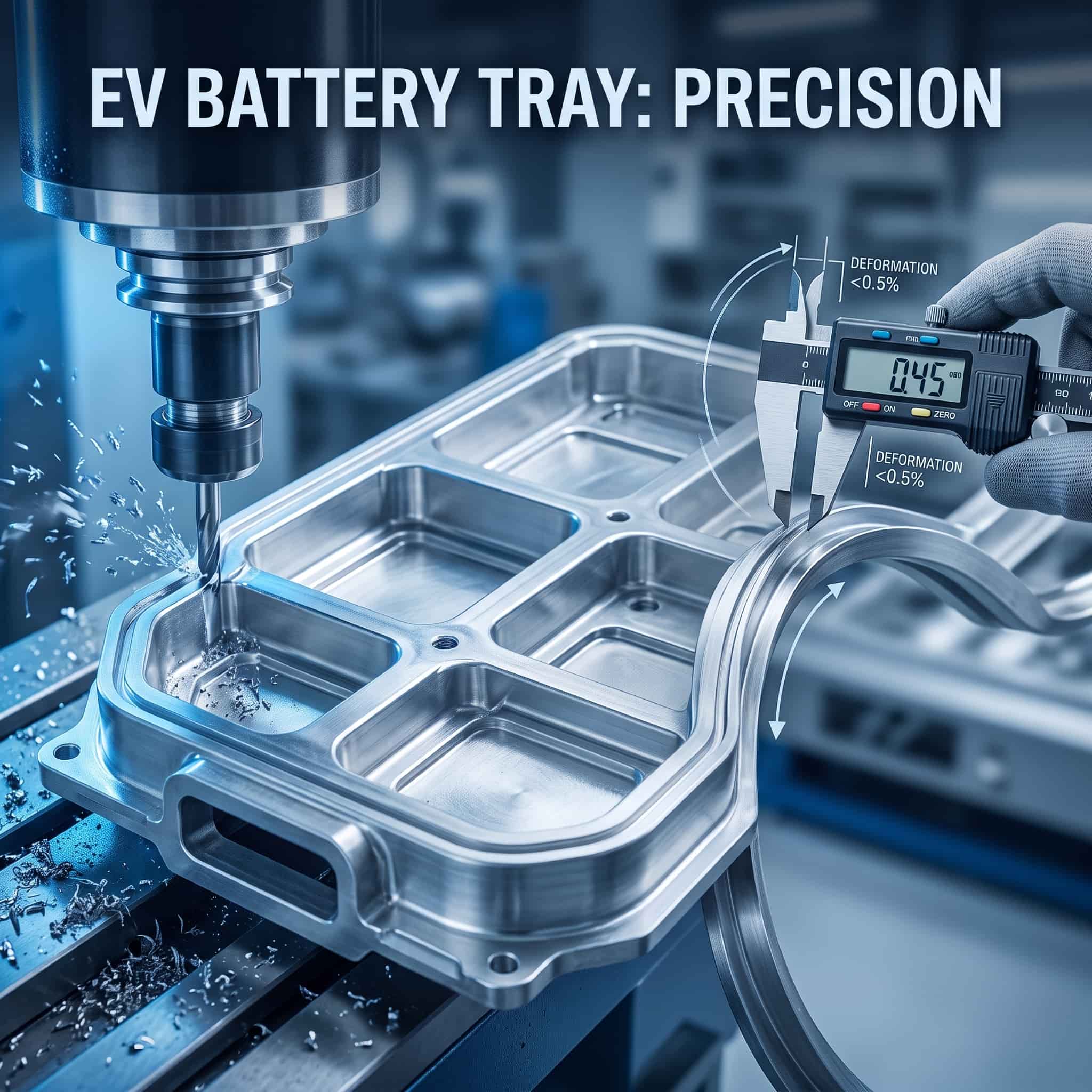
We utilize customized CNC clamping fixtures and optimize high-speed milling paths to minimize internal cutting stress. For curved parts, our proprietary segmented stretch-bending technique maintains cross-sectional deformation strictly within 0.5%, avoiding twisting or profile collapse.
Q5: Are our proprietary drawings and prototyping designs protected under NDA?
Yes, absolutely. We sign legally binding Non-Disclosure Agreements (NDAs) prior to receiving your drawings. All 2D/3D models, tooling designs, and custom die profiles remain 100% your proprietary intellectual property and are never shared with third parties.
Q6: What happens if the delivered prototype sample has discrepancies?
All our products undergo three stages of QC inspection before shipment, maintaining a qualification rate above 99.2%. In the rare event of out-of-spec dimensions, our engineering team responds within 2 hours to conduct root-cause analysis, providing free tool adjustment and expedited resending within 3–5 days.
Get Your Custom Aluminum Prototype Right on the First Try
Have a custom profile drawing or project idea? Send us your 2D/3D technical files today. Our senior engineering team will provide a complimentary DFM assessment, process recommendations, and a competitive factory-direct quote within 24 hours.
Email: huangxiaoping5658@gmail.com Tel / WhatsApp: +86 - 13590685658
Request Rapid Prototyping Quote